%401x.svg)


%401x%20(1).svg)
%401x.svg)
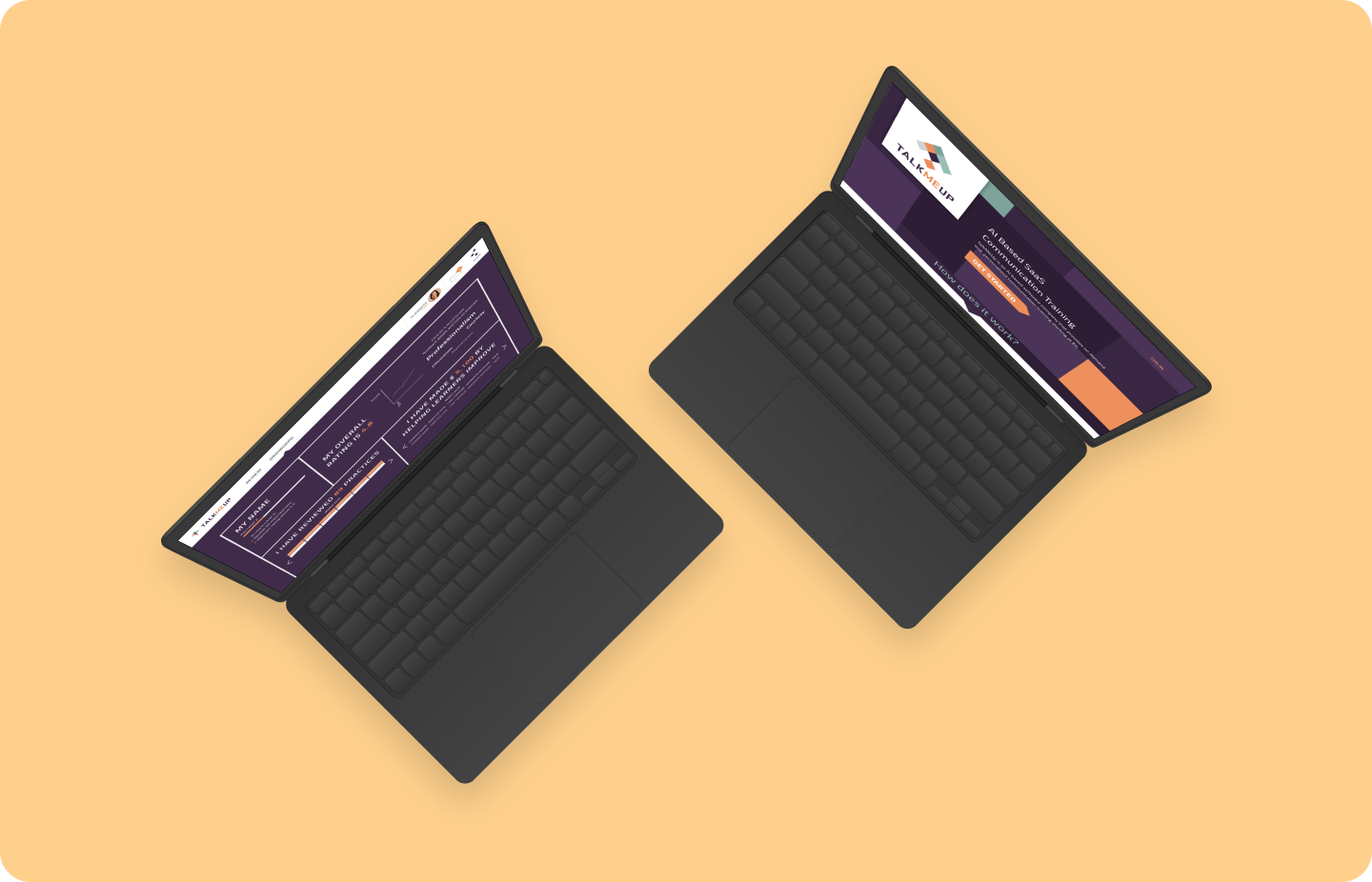
TalkMeUp is an AI-powered SaaS platform for enterprise communication training. As the founding UX designer (2017-18), I designed the core Learner and Coach flows from 0→1, establishing the product's foundational UX.
In 2025, with the industry's shift toward full AI coaching models, I chose to redesign TalkMeUp as a portfolio project—leveraging both my founding designer perspective and current AI SaaS trends. This case study demonstrates how strategic UX redesign can elevate user experience while unlocking new business value in the evolving enterprise training landscape.
Note: This is a speculative redesign project created for portfolio purposes, based on my experience as TalkMeUp's founding designer and current industry trends. All designs reflect my independent vision and do not represent TalkMeUp's official product direction.
Founding UX Designer (2017 - 2018)
Redesign (2025)
Figma
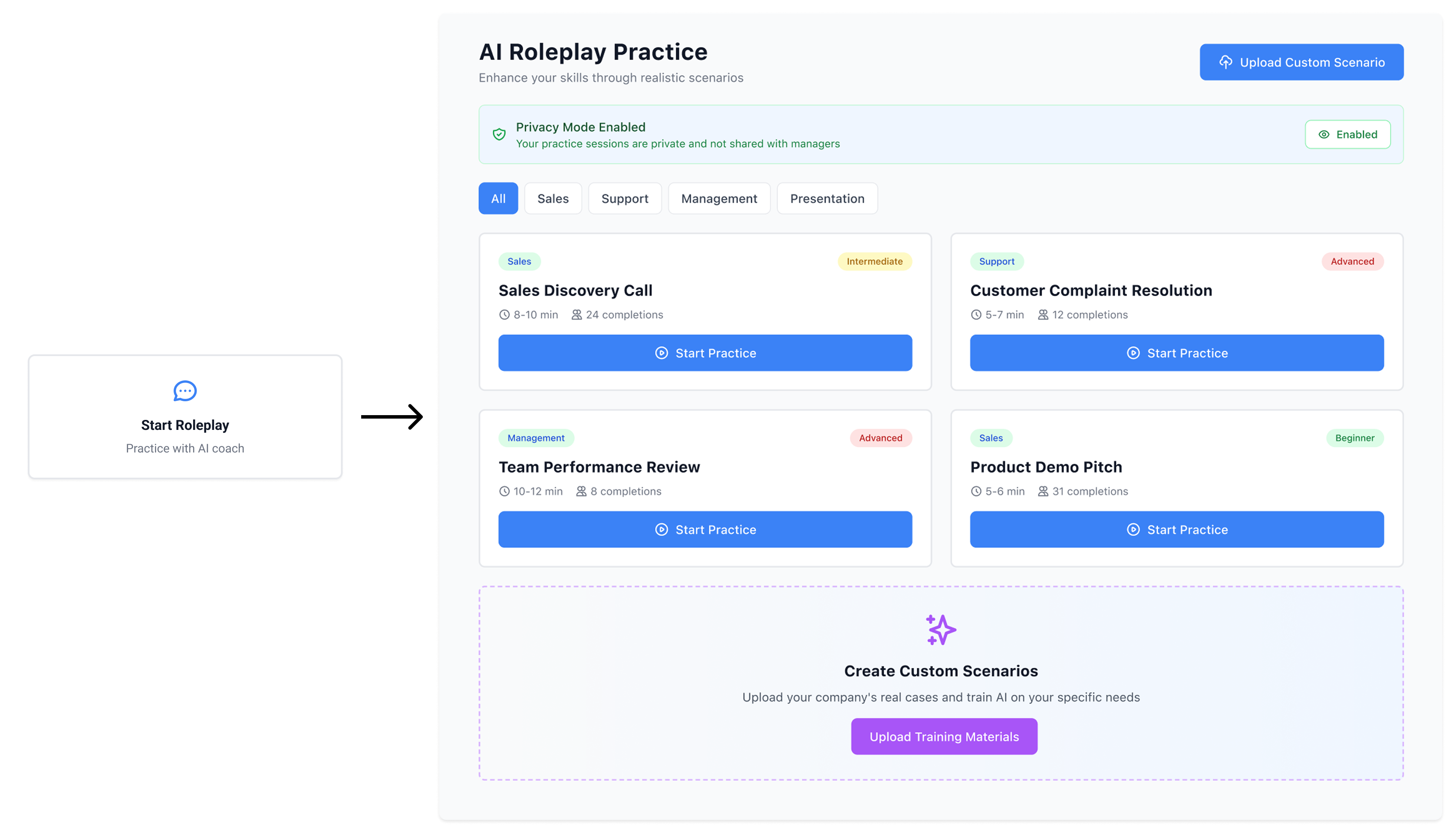
AI Roleplay with custom scenario uploads - companies can train AI on their specific cases
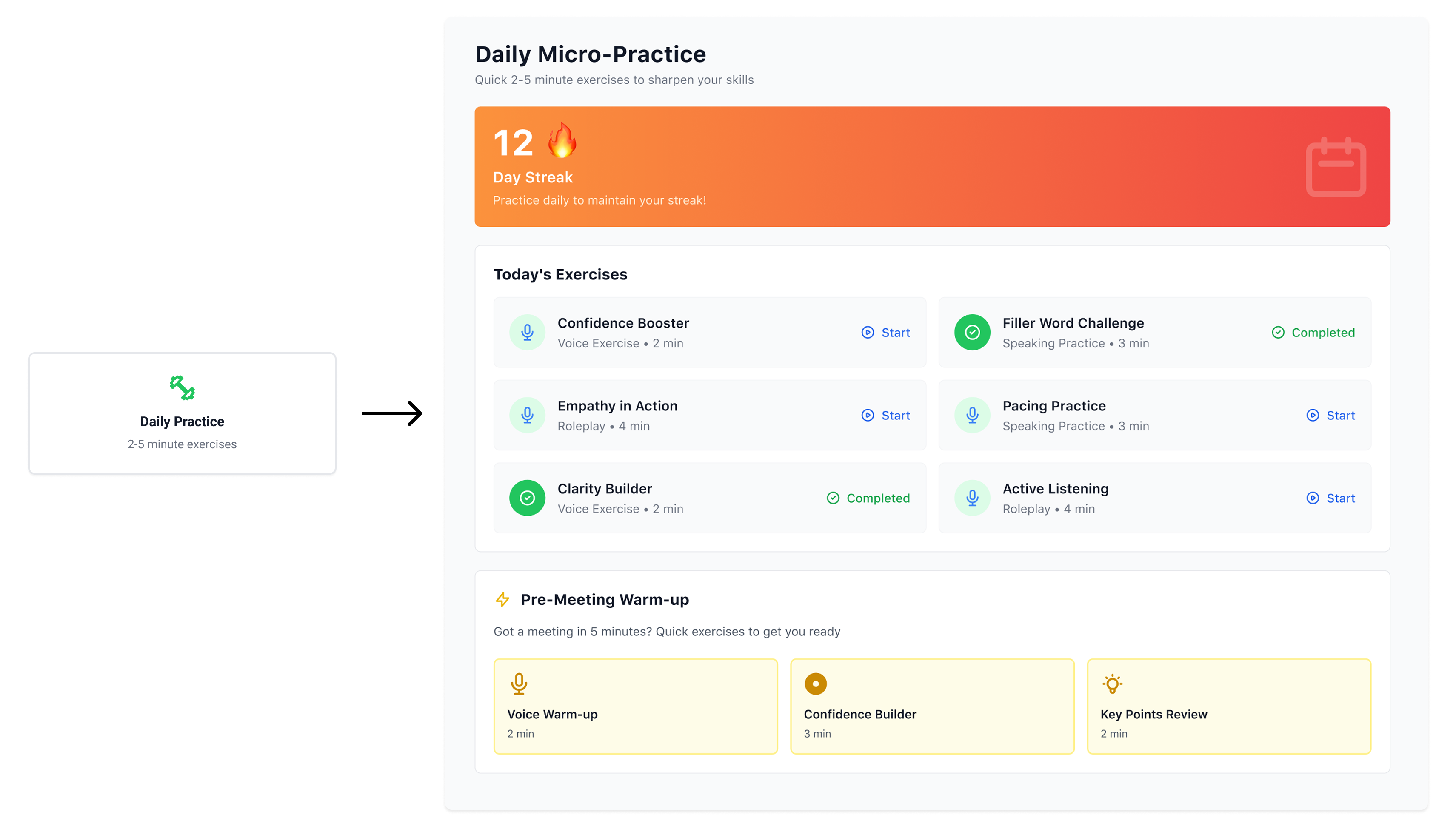
Daily micro-practices (2-5 min) and pre-meeting warmups (3 min)
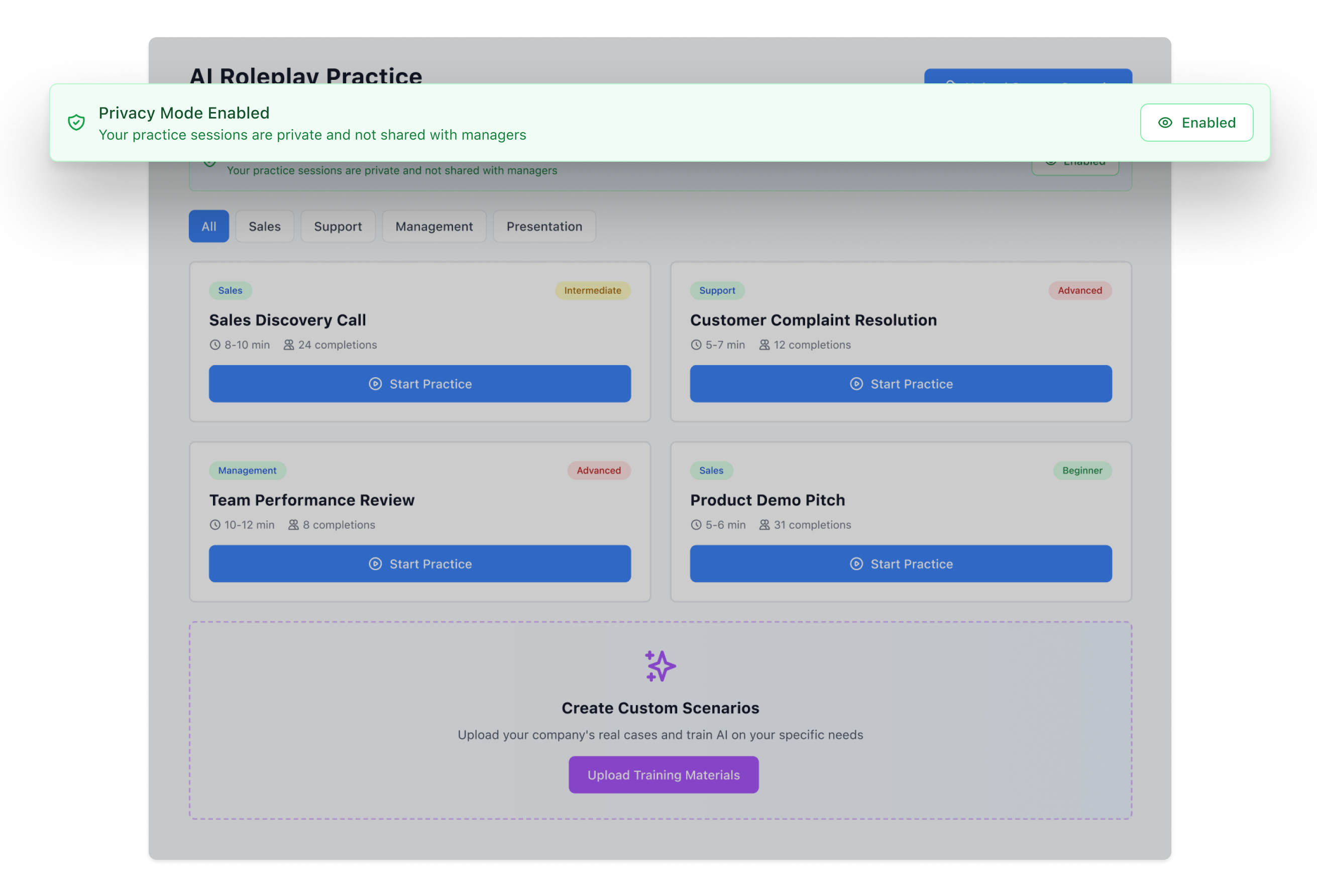
Privacy Mode with clear visual indicators, "helper not monitor" messaging, and private-by-default sessions
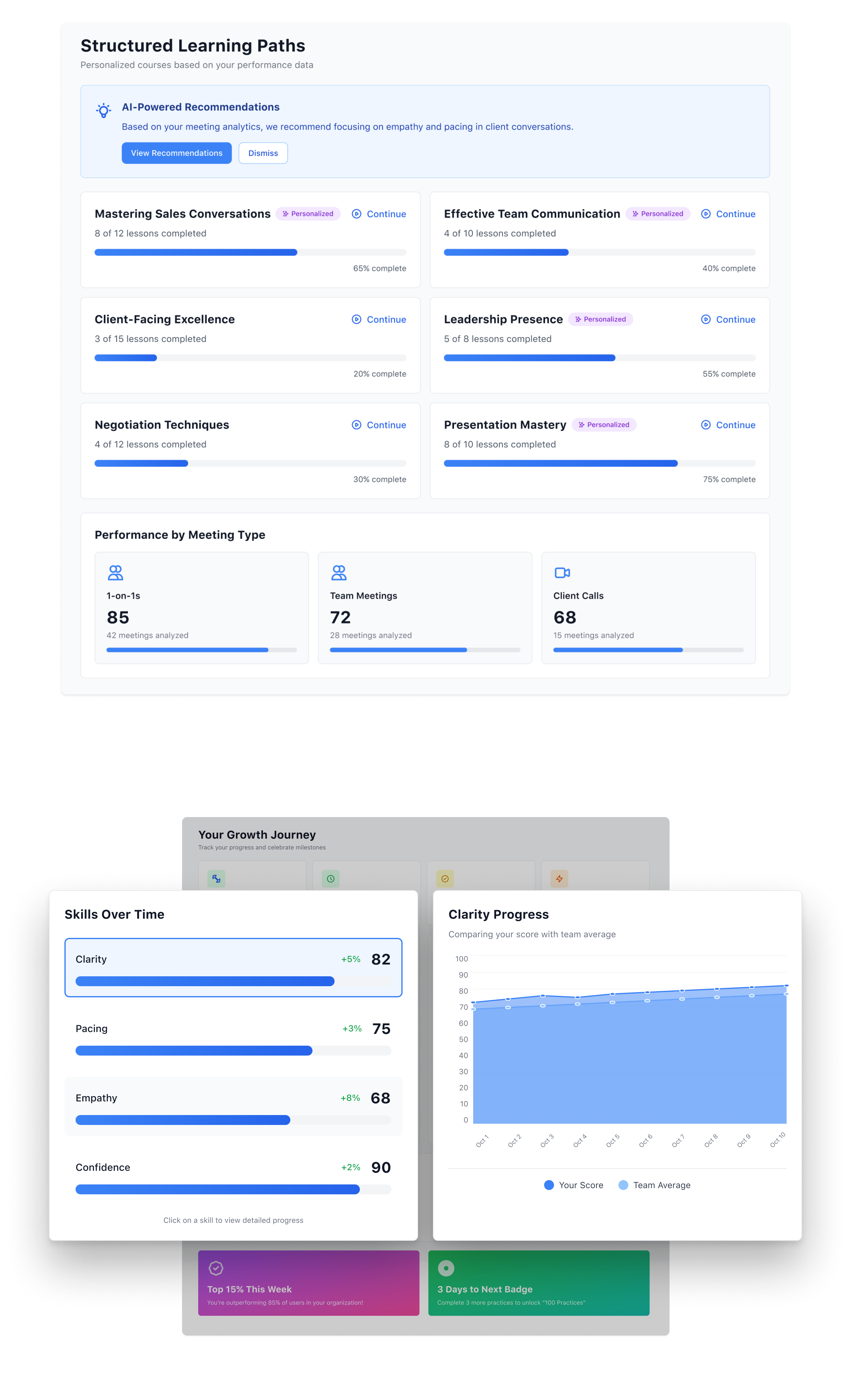
AI-powered recommendations, personalized course tags, meeting-type performance analysis, and skill-based interactive charts
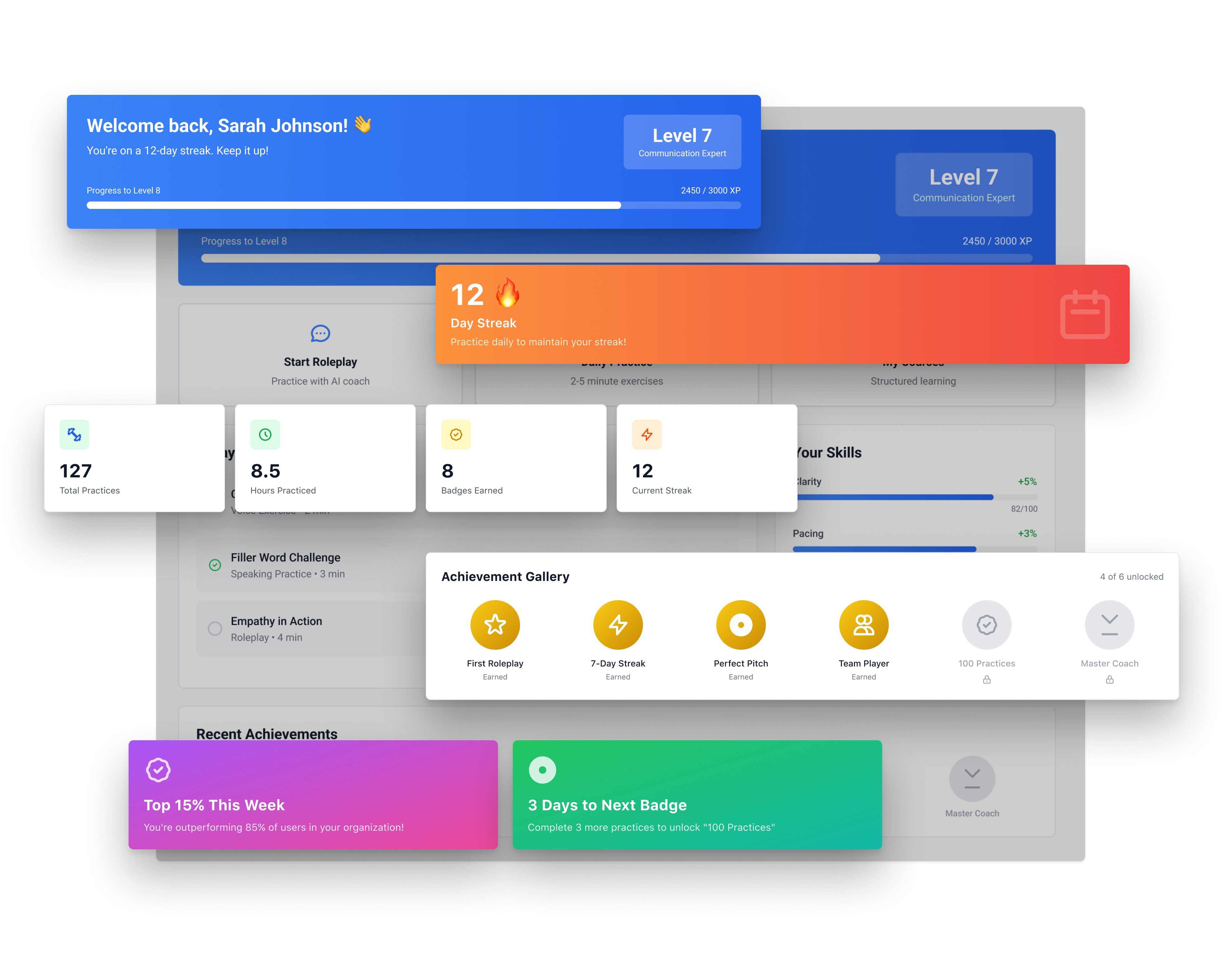
Gamification (badges, streaks, XP levels), progress visualization and peer comparison
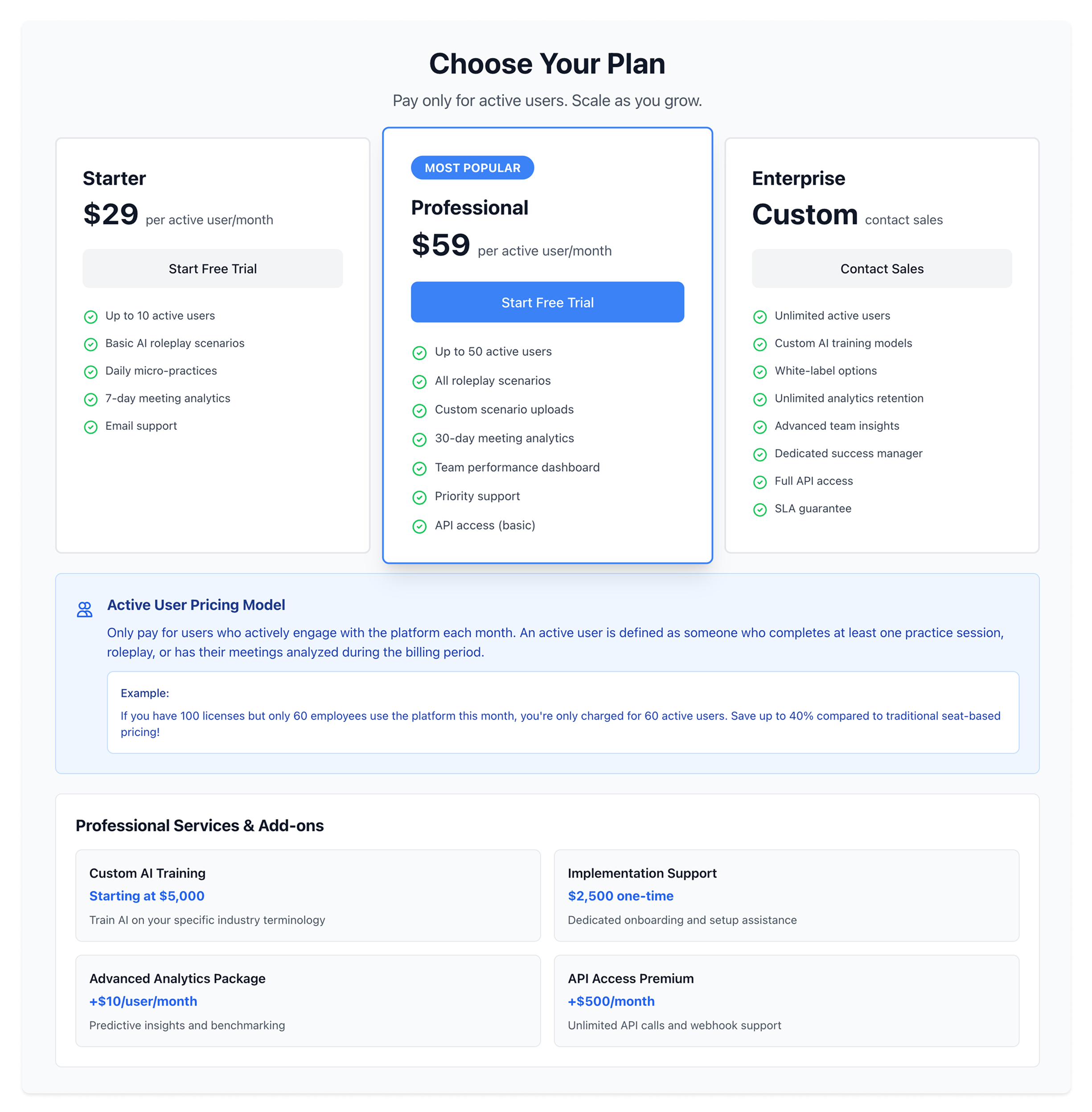
Tiered subscription model with active user pricing model (pay only for engaged users), and professional services add-ons options
To understand TalkMeUp’s current strength and challenges, I did competitive analysis.

By comparing TalkMeup with similar products in the market, I identified TalkMeUp’s unique competitive advantages in market segmentation: it is the only B2B AI SaaS communication training product targeting enterprise users.
TalkMeUp's Unique B2B Competitive Advantages for Enterprise:
If employees don't use it, companies don't renew it.
TalkMeUp's real competitor isn't other platforms—it's employee indifference. Industry data reveals that enterprise training completion rates fall below 30%, with fewer than 15% of employees voluntarily engaging. This creates a critical insight: in B2B SaaS, the buyer is not the user. Companies purchase the platform, but if employees don't use it, renewal fails.
I analyzed B2B products in the current market and found an industry trend: the consumerization of enterprise software. Successful B2B platforms like Slack, Notion, and Figma prove that enterprise-grade functionality paired with consumer-grade UX creates bottom-up adoption—employees love the experience so much that they demand their companies purchase it, turning end-users into the strongest sales force.

Based on the above insights, I went back to competitive analysis to understand what drives the competitors’ daily user engagement. My design strategy is to keep TalkMeUp's B2B positioning while bring the successful 2C patterns from competitors into TalkMeUp's enterprise framework —because the strongest driver for B2B renewals is employees who genuinely want to use the product.

With TalkMeUp's B2B infrastructure already strong, my design focused on elevating the employee experience.
Rather than copying competitor features, I used "How Might We..." questions to guide strategic decisions—determining which patterns from successful C2C platforms truly serve TalkMeUp's context, and where original solutions were needed to fill gaps that competitors overlook. This approach ensures every design choice solves a real user problem while aligning with business goals.